
Table of Contents
It is a common frustration: the pollen count rises, you take your daily dose, and yet you are still struggling with hay fever even on antihistamines. Many people assume that if the symptoms persist, the medication simply isn't strong enough. However, the reality is often more complex.
Because hay fever isn’t just “a bit of pollen.” It’s your immune system overreacting to something harmless, and antihistamines only block the issue - they don’t remove the histamine circulating in your body.
What hay fever really is
Hay fever, also called allergic rhinitis, happens when your immune system mistakes pollen for a threat. In response, it releases histamine and other inflammatory chemicals to try to protect you. That’s what causes the classic symptoms: sneezing, congestion, watery eyes and itching.
In a way, those symptoms are your body’s attempt to get pollen out. The problem is that the response is often far bigger than the actual threat.
Why histamine keeps the cycle going
Histamine is not the villain - it’s a messenger with important jobs throughout the body. It helps regulate immune responses, stomach acid, blood vessels and brain signalling. But when too much histamine is released, or when your body struggles to clear it, the message becomes noise.
That’s where the cycle starts to feel relentless. The more histamine your body releases, the more symptoms you tend to feel. And if your system is already reactive, even a small pollen exposure can feel like too much.
What antihistamines do - and what they miss
Antihistamines can be useful in acute situations because they block histamine receptors, preventing histamine from attaching and sending its usual signal. This is why they can reduce sneezing, itching, and watery eyes. However, they do not remove histamine from your body. This explains why so many people continue to suffer from hay fever even on antihistamines; the "blockade" is in place, but the trigger is still circulating.
Because the histamine doesn’t simply vanish, it stays in the system. This means your overall histamine load remains high even if some symptoms are being muted. This is a primary reason why you might feel only partially better, or find symptoms shifting into areas like brain fog or skin irritation rather than disappearing entirely.
Furthermore, not all antihistamines behave the same way. Some are sedating, others are not, and they target different receptors with varying degrees of strength. So while one brand might calm your nose, it may not fully address the wider picture, leaving you struggling with hay fever even on antihistamines because the systemic load hasn't been addressed.
The histamine receptors you never hear about
Histamine works through four main receptors: H1, H2, H3 and H4. H1 is most associated with hay fever symptoms, H2 with stomach acid, H3 with brain signalling, and H4 with immune regulation. That matters because histamine is not just active in your sinuses - it’s active across the whole body.
So if you block H1 and H2, the excess histamine doesn’t disappear. It can still contribute to symptoms elsewhere, including skin issues, bloating, fatigue or brain fog. That’s why hay fever can sometimes be the first clue that something bigger is going on.
For some people, the pattern is seasonal. For others, it becomes a wider histamine issue that shows up as eczema flares, headaches, hormone-related symptoms, digestive upset or an odd sense that the body is just always “on.”
Why symptoms can spread beyond the nose
This is one of the most confusing parts for people. You start with hay fever, but then the symptoms seem to move into your skin, gut, brain, or mood. That’s because histamine has jobs all over the body, and when levels are too high, it can affect multiple systems at once. Because antihistamines only block the receptor, the circulating histamine simply travels to find another available receptor. This is why you can often find yourself experiencing hay fever even on antihistamines, or being prescribed multiple medications when the first one "stops working."
You might notice bloating after foods that never used to bother you, or brain fog that makes work feel harder than it should. Perhaps your skin suddenly becomes reactive, dry, or itchy during pollen season. These aren't separate issues; they are all part of the same histamine story.
Ultimately, this is why antihistamines don’t feel like enough. They may quiet one piece of the puzzle. For example, Claritin blocks the H1 receptor associated with nasal symptoms, but they don’t change the internal terrain that made the body so reactive in the first place. They don't stop the histamine from being released, so it continues to travel and cause symptoms in other parts of the body, leaving you stuck with hay fever even on antihistamines.
What to do when antihistamines aren’t enough
If you’re stuck in the same springtime cycle year after year, it may be time to zoom out. Hay fever is not just about pollen, it’s about how your body responds to pollen. This is why long-term support needs to be broader than a simple tablet that blocks receptors. If you are still battling hay fever even on antihistamines, it is a clear sign that your system needs help clearing the build-up, not just masking it.
A more holistic approach focuses on lowering the overall histamine load and supporting the body’s ability to re-regulate. This includes practical steps like:
Rinsing pollen off skin and hair after being outdoors.
Keeping windows closed on high-pollen days and using an air purifier.
Choosing mostly unprocessed foods to reduce the inflammatory burden.
Supporting the system with specific nutrients and binders that ease the internal pressure.
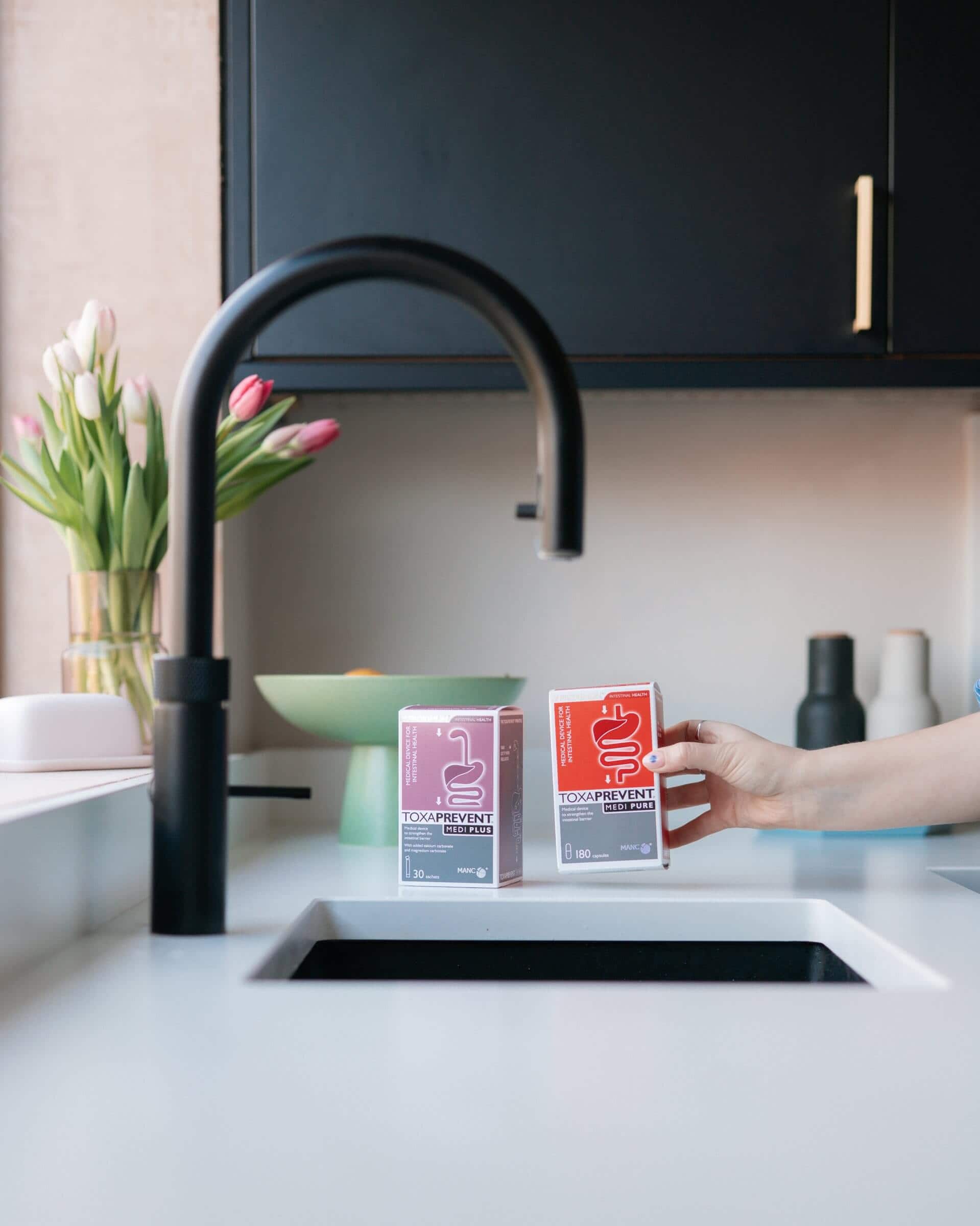
If you’re tired of the "blocked but still symptomatic" pattern, explore our Hay Fever Histamine Bundle. It combines Toxaprevent, which binds to and safely removes excess histamine from the body, with magnesium and vitamin D to help stabilize and balance your immune response. It’s designed to help your body finally calm the pollen reaction cycle, providing the relief that is often missing when you're struggling with hay fever even on antihistamines.
The Hay Fever Bundle
£139.00
Every year, hay fever hits the same people the same way. Not because pollen is unavoidable but because their histamine load was already elevated long before symptoms became unbearable. This bundle is designed to support your body while the season… read more

Key takeaways
Hay fever is an immune overreaction to harmless pollen, which triggers histamine release.
Antihistamines block histamine receptors, but they don’t remove histamine from the body.
If histamine keeps building, symptoms can continue or shift into other areas like skin, gut or brain.
Different histamine receptors affect different parts of the body, which is why hay fever can feel bigger than “just allergies.”
A more holistic approach can help lower the histamine load and support your body to re-regulate.
References
NHS (2017) ‘Hay fever’. Available at: https://www.nhs.uk/conditions/hay-fever/
Allergy UK (2013) ‘Hay Fever and Allergic Rhinitis’. Available at: https://www.allergyuk.org/about-allergy/types-of-allergies/hayfever/
Mayo Clinic (2024) ‘Hay fever – Symptoms and causes’. Available at: https://www.mayoclinic.org/diseases-conditions/hay-fever/symptoms-causes/syc-20373039
Living Well Partnership NHS (2026) ‘Managing your hay fever’. Available at: https://livingwellpartnership.nhs.uk/news/hayfever/
FAQs
Why do I still have hay fever even on antihistamines?
Antihistamines are "blockers," not "clearers." They sit on your H1 receptors to stop histamine from attaching, but they don't actually remove histamine from your bloodstream. If the pollen count is high or your "histamine bucket" is already full from food or stress, the excess histamine will simply travel to other receptors in your gut, skin, or brain, causing symptoms to persist or shift.
Can you take two different types of antihistamines at once?
While doctors sometimes prescribe multiple antihistamines to target different receptors (like H1 for hay fever and H2 for gut/acid issues), this doesn't address the root cause. If you find yourself needing more medication because you have hay fever even on antihistamines, it is often a sign that your body's total histamine load is too high and needs support with clearance, rather than just more blocking.
Does antihistamine tolerance exist?
It often feels like antihistamines "stop working," but usually, it isn't that you've become immune to the drug. Rather, your internal histamine levels have risen so high that the medication can no longer keep up with the volume. This is why you might feel the familiar itch of hay fever even on antihistamines you’ve used successfully for years.