
Table of Contents
Feeling itchy for no clear reason? Bloated after random foods? Wired, anxious and unable to switch off? Headaches, flushing, runny nose, and reactions to wine or leftovers? All of these can be clues that your body has a histamine intolerance – even if you’ve never thought of yourself as “allergic.”
Histamine isn’t just about hay fever. It’s a powerful messenger that helps keep you alive and well. The challenge comes when your body is making too much – or not clearing it properly.
What histamine actually is (and why you need it)
Histamine is a natural chemical your body makes. It’s stored mainly in immune cells called mast cells and basophils, and also produced in the gut and brain.
Despite its bad reputation, histamine is essential. It helps to:
Defend you against infections and injuries
Control stomach acid so you can digest food
Regulate blood flow and blood vessel dilation
Act as a neurotransmitter (chemical messenger) in your brain
Guide immune cells to where they’re needed[1–3]
So histamine isn’t the villain. The real problem is when your body’s “histamine balance” is off – aka, you’re making or taking in more than you can clear, or your mast cells are over‑reactive and releasing too much.
Where histamine works in your body
Histamine works by docking onto special receptors on cells, a bit like a key fitting into a lock. There are four main histamine receptors – H1, H2, H3 and H4 – each found in different tissues.
Here’s a simple overview:
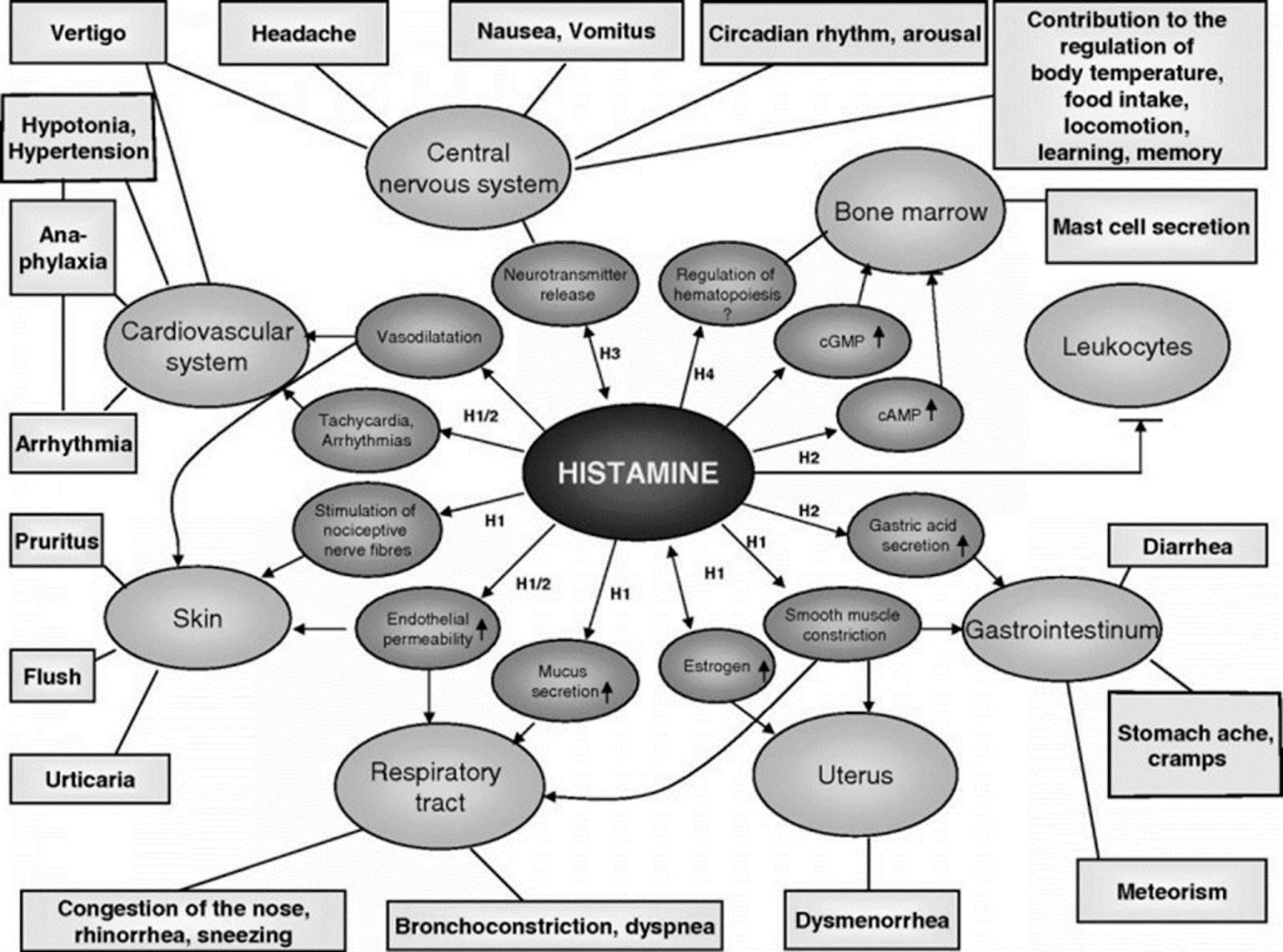
Skin (H1, H4): involved in itching, hives, rashes, flushing and swelling.
Nose, eyes and lungs (H1): sneezing, runny or blocked nose, itchy eyes, wheeze and tight chest.
Gut (H1, H2): stomach acid production, gut motility, nausea, cramping, diarrhoea or bloating.
Brain (H1, H3): wakefulness, focus, mood, appetite and pain perception.
Heart and blood vessels (H1, H2): changes in heart rate, low blood pressure, dizziness, flushing.
Immune system (H1, H4): directing immune cells, driving inflammation where it’s needed.
When histamine is at a healthy level, all of these are positives – you fight infections, digest food properly, stay alert in the daytime and your immune system knows what to do. When histamine is constantly high or poorly cleared, these same systems can start to feel like they’re misfiring.
Common signs you may have a histamine intolerance
Because histamine has jobs all over the body, symptoms can look very different from person to person. You don’t need all of these – but a cluster can be a useful clue.
Possible histamine‑related symptoms include:[1,2,4–6]
Skin: itching, hives, rashes, eczema flares, flushing, feeling hot and prickly, sensitivity to heat or pressure.
Gut: bloating, loose stools or diarrhoea, nausea, cramping, “IBS‑type” symptoms, reflux or heartburn.
Nose and eyes: sneezing, runny or blocked nose, post‑nasal drip, itchy or watery eyes – even outside of peak pollen season.
Head and brain: headaches or migraines, dizziness, brain fog, irritability, anxiety or feeling “wired but tired.”
Heart and circulation: episodes of fast heart rate, palpitations, light‑headedness on standing, temperature intolerance.
Lungs and chest: a tendency to wheeze or cough with triggers like dust, pets, cold air or exercise.
Bladder and genitals: urgency, burning or irritation with no clear infection (sometimes linked to mast cell activation).
You may notice your symptoms flare with:
Alcohol (especially red wine, champagne and beer)
Aged or fermented foods (cheese, cured meats, sauerkraut, kombucha)
Leftovers, especially if not cooled quickly
Certain fish, tomatoes, spinach, aubergine, citrus or chocolate
High‑pollen days, dust, mould or strong chemical smells
On their own, each symptom can have many causes. But when you see the same person experiencing skin, gut, brain and allergy‑type issues that come and go with triggers, histamine is worth considering.
Why histamine problems are often missed
Most of us are taught that histamine = hay fever and allergies. If you don’t fit that box, histamine rarely gets mentioned.
This is why so many people spend years:
Treating their “IBS” with endless diet experiments
Managing “anxiety” with nothing but stress tips
Taking painkillers for migraines
Applying creams for rashes
Using antacids for reflux
…without anyone stepping back to ask, “Could histamine be the thread tying all of this together?”
Doctors are trained to look for clear‑cut allergies (like immediate hives or throat swelling) and serious conditions – which is absolutely right. But lower‑grade, chronic histamine overload or mast cell “twitchiness” can fly under the radar. Tests for histamine intolerance are also not standardised, which makes things more confusing.
So it’s not uncommon for people to see multiple specialists – dermatologist, gastroenterologist, neurologist, psychiatrist – and get separate labels, without a unifying explanation.
How to start joining the dots
A simple way to think about histamine issues is the “bucket” idea:
Your body has a certain capacity to handle histamine.
Anything that adds histamine (foods, allergies, infections, toxins, stress) drips into the bucket.
Enzymes in your gut and tissues – mainly diamine oxidase (DAO) and histamine‑N‑methyltransferase (HNMT) – help empty the bucket.[2–4]
You may run into problems when:
Your bucket is filling faster than you can empty it (lots of triggers, poor gut health).
Your drainage is slowed down (low DAO/HNMT activity, nutrient deficiencies, alcohol, certain medications).
The result is that your total “histamine load” is too high. Even small extra triggers (a glass of wine, a high‑pollen day, a takeaway) can then tip you into symptoms.
Clues that histamine might be part of your picture:
You react to many different, seemingly unrelated things.
Your symptoms are up‑and‑down, and often worse around hormones, heat, stress or histamine‑rich foods.
Antihistamines help – but don’t fully solve the problem, or you need them more and more often.
Simple first steps: food, lifestyle and supports
If you suspect a histamine intolerance, always talk to your health practitioner first – especially if symptoms are severe, new or worrying. That said, there are gentle, common‑sense steps that can help many people lower their histamine load.
Possible starting points (general, not personalised medical advice):
Tidy up your food environment
Base meals around fresh, minimally processed whole foods.
Be cautious with leftovers (if they cause you an issue): cool quickly, store properly, eat within 24 hours.
Notice whether certain high‑histamine or histamine‑releasing foods (like dairy, aged cheese, cured meats, vinegars, wine, tomatoes, citrus) clearly flare symptoms.
Look after your gut
Support regular bowel movements, as constipation can slow histamine clearance.
Work with a practitioner if you suspect issues like SIBO, infections or significant IBS‑type symptoms.
Support your nervous system
Histamine in the brain is involved in wakefulness, which is why excess can feel like anxiety or insomnia.
Prioritise sleep, gentle movement, time outside and stress‑management you actually enjoy (not just a “should”).
Consider targeted supports
Some people do well with short‑term, supervised lower‑histamine eating while working on the root causes (gut, stress, toxins), rather than strict long‑term restriction.
Nutrients like magnesium, vitamin d, c and certain b vitamins can support histamine pathways, but should be used with guidance.
And crucially: instead of only blocking histamine receptors with long‑term antihistamines, you can also look at ways to reduce the histamine bucket itself – for example, by improving gut health and supporting your body to bind and remove excess histamine in the gut.
If you see yourself in this – the itching, bloating, flushing, headaches, wired anxiety, and feeling like your body overreacts to “everything” – there might be a histamine story behind it. Recognising that is often the first big step. From there, you can start shifting from chasing individual symptoms to calming the whole system and lightening that histamine bucket, so your body doesn’t have to shout quite so loudly to get your attention.
If you're ready to start lowering your histamine load today, the Toxaprevent range is our go-to for targeted gut support. Unlike many supplements that try to manage symptoms after they’ve started, Toxaprevent works in the digestive tract to bind and remove excess histamine before your body has to deal with it.
It’s formulated with MANC® (Modified and Activated Natural Clinoptilolite), a medical-grade mineral that acts like a sponge for histamine, heavy metals, and ammonium—effectively helping to "empty your bucket" from the inside out.
Daily Cleanse Bundle: Zeolite Detox Kit
£110.00
Most of us are asking our bodies to detox on “hard mode” every day. We’re constantly exposed to chemicals, pesticides, plastics, hormones, and pollutants, without enough nutrients and antioxidants to keep detox pathways running smoothly. This zeolite duo is designed… read more

Key takeaways
Histamine isn’t “bad”, it’s a vital chemical messenger involved in immunity, digestion, brain function and more.
You can have a histamine intolerance even if you’ve never had classic allergies or hay fever.
Symptoms can show up anywhere histamine works: skin, gut, brain, heart, lungs, bladder and more.
Many people spend years treating separate symptoms (IBS, anxiety, migraines, flushing) without realising histamine connects them.
A smarter approach is to reduce your “histamine load” and support your body to clear excess histamine, rather than just blocking it.
References
Thangam EB, et al. The Role of Histamine and Histamine Receptors in Mast Cell–Mediated Allergy and Inflammation. Front Immunol. 2018;9:1873.
Maintz L, Novak N. Histamine and histamine intolerance. Am J Clin Nutr. 2007;85(5):1185–1196.
Panula P, et al. Histamine receptors and their ligands: recent developments. Br J Pharmacol. 2015;172(3):1906–1914.
Reese I, et al. German guideline for the management of adverse reactions to ingested histamine. Allergo J Int. 2017;26(2):72–79.
Afrin LB. Mast cell activation syndrome: An emerging model for multi-system, multi-symptom illness. J Hematol Oncol. 2013;6:10.
Schink M, et al. Histamine intolerance: The current state of the art. Biomolecules. 2018;8(3):55.
FAQs
How long does it take to lower your "histamine bucket"?
While everyone is different, many people notice a shift in "acute" symptoms (like flushing or hives) within 3 to 7 days of reducing high-histamine triggers. However, addressing the root cause—like gut health or enzyme support—usually takes 4 to 12 weeks for long-term stability.
Can I suddenly develop a histamine issue as an adult?
Yes. Histamine intolerance isn't usually a born allergy; it's a "capacity" issue. Changes in gut health (like SIBO or antibiotics), high stress, hormonal shifts (especially perimenopause), or a heavy viral load can all suddenly "fill the bucket" and make you reactive to foods you used to enjoy.
Is a low-histamine diet meant to be forever?
No. A low-histamine diet is a diagnostic tool, not a forever lifestyle. The goal is to calm the system down so you can identify your triggers and work on your "drainage" (gut and liver health). Most people can eventually reintroduce many foods once their bucket is no longer overflowing.