
Table of Contents
- Antihistamines:
- What histamine does in your body
- The main types of antihistamines
- Why some antihistamines make you sleepy
- Why reading the label really matters
- What happens to the excess histamine in your body
- Why removal (not just blocking) is key
- Where Toxaprevent and our hay fever histamine bundle fit in
- Key takeaways
- References
- FAQs
Antihistamines:
Antihistamines are great at quieting symptoms in the moment – but if you’re relying on them day in, day out, and your doctor keeps prescribing antihistamines to you, you’re probably not getting to the root of your histamine issues. This is where actually removing excess histamine, not just blocking it, becomes important.
What histamine does in your body
Histamine is a natural chemical your body uses as a messenger. It helps with immune responses, stomach acid, blood flow and even brain signalling. When you meet a trigger – like pollen, dust mites, mould, certain foods or insect stings – histamine is released from immune cells (especially mast cells and basophils).
Histamine then attaches to “docking stations” on cells called histamine receptors. There are four main types:
H1 receptors: linked to allergy‑type symptoms like sneezing, itching, runny nose, swelling and tight airways.
H2 receptors: found in the stomach and blood vessels; they help stimulate stomach acid and affect circulation.
H3 receptors: mainly in the brain; they help control wakefulness, appetite and other brain chemicals.
H4 receptors: found on immune cells; they help guide immune cells and drive inflammation.
This is why histamine doesn’t just cause hay fever; it can also be involved in heartburn, hives, flushing, headaches, gut issues and more, depending on which receptors are being triggered.
The main types of antihistamines
Most prescribed or over‑the‑counter antihistamines block the H1 or H2 receptors.
H1 antihistamines – “allergy tablets”
These are the ones people usually think of for hay fever. They’re used for:
Hay fever (seasonal allergic rhinitis)
Dust mite and pet allergies
Hives and itchy skin
Some forms of allergic conjunctivitis
Mild allergic reactions (always seek urgent help for serious reactions)
Common UK examples include cetirizine, loratadine and fexofenadine (often labelled as non‑drowsy), and older options like chlorphenamine, which are more sedating.
H2 antihistamines – for the stomach
H2 blockers are used more for gut‑related symptoms. They’re prescribed for:
Heartburn and acid reflux
Gastritis
Peptic ulcers
They work mainly by reducing stomach acid production. Examples include famotidine and, historically, ranitidine.
The key thing: both H1 and H2 antihistamines block receptors. They don’t remove histamine itself.
Why some antihistamines make you sleepy
Antihistamines are often divided into “first‑generation” and “second‑generation”:
First‑generation: older, more sedating.
Second‑generation: newer, much less sedating.
The main difference is how easily the drug crosses the blood–brain barrier and how “messy” it is in the brain. First‑generation antihistamines (like chlorphenamine and diphenhydramine) get into the brain easily and also affect other receptors, which leads to:
Drowsiness and slower reaction times
Blurred vision and dry mouth
Reduced alertness and concentration
Second‑generation antihistamines (like cetirizine, loratadine and fexofenadine) are more selective and don’t cross into the brain as easily, so they’re much less likely to make you sleepy. They were developed specifically to avoid that “knocked‑out” feeling people got from older pills.
Why reading the label really matters
It’s easy to think, “It’s only an antihistamine, I’ll just take it every day,” especially during hay fever season. But the packaging and patient information leaflet are there for a reason.
Most will say they “relieve the symptoms of hay fever/allergy” – they’re not fixing the underlying reason your body is so reactive. The leaflet will usually also warn about:
Side effects like drowsiness, dry mouth, dizziness, constipation or headaches
Not driving or using machines if you feel sleepy
Being careful if you’re pregnant, breastfeeding, older, or on other medicines
Long‑term and high‑dose use, especially of older sedating antihistamines, has been linked with a higher risk of daytime sleepiness, falls (particularly in older adults) and possible cognitive effects. This doesn’t mean “never take them”, just that they’re best used as one tool, not the only strategy, for months or years on end.
What happens to the excess histamine in your body
Here’s the bit most people are never told: blocking the receptor doesn’t make histamine vanish. Your body still makes histamine in response to triggers like pollen, infections, gut imbalances, toxins, stress and certain foods. When you take an antihistamine, you:
Put a “cap” on some of the receptors, so histamine can’t attach there.
Leave the actual histamine molecules still floating around until your body can break them down, attach them to a different receptor or move them out.
Your main histamine‑clearing enzymes are diamine oxidase (DAO), mostly in the gut, and histamine‑N‑methyltransferase (HNMT) inside the cells. If these are overwhelmed or not working well – for example because of gut inflammation, nutrient deficiencies, alcohol, infections or certain medications – histamine can build up faster than you can clear it. That’s when you may feel like you’re “chasing” symptoms: you suppress the sneezing and itchy eyes, but then heartburn, flushing, headaches, gut issues or fatigue appear instead.
Why removal (not just blocking) is key
Think of your body like a bucket. Every histamine trigger – pollen, mould, foods, chemicals in your home, infections, stress – drips into that bucket. Antihistamines put a lid on some of the splashes coming out, but they don’t drain the bucket itself.
From a functional point of view, long‑term relief usually means:
Reducing what’s filling the bucket (triggers, toxins, ultra‑processed foods, etc.).
Supporting the systems that empty the bucket (gut health, enzymes, detox pathways).
One interesting way to help the “emptying” side is to physically bind histamine in the gut before it can keep recirculating.
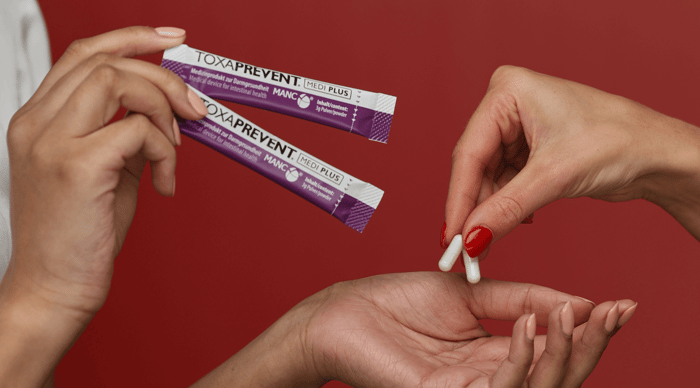
Zeolite Clinoptilolite is a natural, porous mineral with a cage‑like structure that can trap certain positively charged molecules and biogenic amines like histamine. Studies on the purified clinoptilolite‑based product Toxaprevent, shows that it can bind histamine in the gut and support a healthier gut barrier, with improvements seen in various intolerance and inflammatory symptoms.
In simple terms: it acts like a microscopic sponge in the gut, soaking up some of the excess histamine and carrying it out in your stool, instead of letting it keep winding up your immune system.
Where Toxaprevent and our hay fever histamine bundle fit in
At Made By Daily, we like to think of hay fever and histamine care as a “whole system” project, not just a one‑pill fix.
Our upcoming Hay fever Histamine Bundle is designed to support you on three levels:
Toxaprevent zeolite: uses medical‑grade zeolite clinoptilolite to bind excess histamine and other positively charged toxins in the gut, helping to physically remove them from the body and lower your overall histamine load.
Activated vitamin D3: supports normal immune function and helps your immune system respond in a more balanced way to environmental triggers (vitamin D3 is crucial for regulating immune responses and has been linked to allergy risk when low).
Magnesium: helps calm the nervous system, supports muscle relaxation and hundreds of enzyme reactions, and can make your whole system feel less “on edge” when pollen counts rise.
This kind of bundle is not a replacement for prescribed medication or emergency allergy care. Instead, it’s a common‑sense, holistic add‑on: helping to lower the histamine bucket, support immune balance and calm the nervous system, so you’re not relying only on receptor‑blocking tablets.
If you’re tired of playing “antihistamine whack‑a‑mole” – swapping brands, upping doses and still feeling like your system is on high alert – a more root‑cause approach can be a game‑changer.
If you’re ready for a more grounded, whole‑body way to support histamine and hay fever, keep an eye out for our Hay fever Histamine Bundle. With Toxaprevent zeolite to bind and remove excess histamine, activated vitamin D for immune balance and magnesium for a calmer nervous system, it’s designed to work alongside your usual tools – so you’re not stuck on the antihistamine treadmill forever.
Key takeaways
Antihistamines block histamine receptors, they don’t remove histamine from your body.
Your body has different histamine receptors (H1, H2, H3, H4), which is why symptoms can “move” around.
Drowsy vs non‑drowsy antihistamines come down to how easily they get into the brain.
Long‑term daily use of antihistamines can bring side effects and still doesn’t solve histamine overload.
Supporting your body to bind and clear excess histamine (for example with Toxaprevent zeolite, plus vitamin D and magnesium) is a more holistic, common‑sense approach.
References
Thangam EB, et al. The Role of Histamine and Histamine Receptors in Mast Cell–Mediated Allergy and Inflammation. Front Immunol. 2018;9:1873.
Simons FE, Simons KJ. Histamine and H1-antihistamines: celebrating a century of progress. J Allergy Clin Immunol. 2011;128(6):1139–1150.
Panula P, et al. Histamine receptors and their ligands: recent developments. Br J Pharmacol. 2015;172(3): 1906–1914.
NHS. Antihistamines – Uses, types and side effects. NHS.uk.
Church MK, Maurer M. Safety and efficacy of non-sedating antihistamines in the treatment of chronic urticaria. Allergy. 2012;67(3): 318–326.
Dutta PK, et al. Histamine-binding capacities of different natural zeolites. Sci Rep. 2018;8:3663.
Lamprecht M, et al. Effects of a clinoptilolite-based zeolite on intestinal barrier integrity and immune parameters in humans. J Int Soc Sports Nutr. 2015;12:40.
Brough HA, et al. Vitamin D and allergy: Possible role in pathogenesis and potential for therapy. Expert Rev Clin Immunol. 2010;6(5): 651–661.
Gröber U, Schmidt J, Kisters K. Magnesium in prevention and therapy. Nutrients. 2015;7(9):8199–8226.
Toxaprevent Sachets

£55.00
Key Benefits Removes Harmful Toxins - binds to and eliminates histamine, ammonium, and heavy metals that contribute to acid reflux, digestive discomfort, and H. pylori symptoms. Supports Digestive Health - cleans the upper GI tract, helping reduce inflammation, acid reflux, and… read more